
- Scripts work only with original devices iProg Pro
-
Processing Time: From a few hours up to several days.
Scripts are created individually by different third-party developers, so fulfillment speed depends directly on their current workload.
Toyota/Lexus ECU Configuration Reset and Adaptation via CAN Online for iProg Pro
Toyota/Lexus script for iProg Pro is designed for professional ECU configuration reset and adaptation according to the vehicle’s actual equipment using CAN Online.
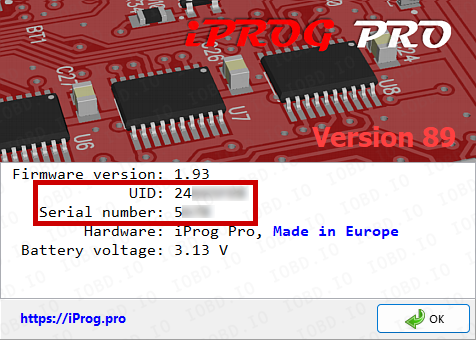
The script only works with original iProg Pro programmer! Please write Serial Number and UID in the order.
This solution enables proper synchronization of control unit software configuration after module replacement, regional change, or vehicle retrofit.
The tool is intended for automotive electronics specialists, diagnostics engineers, and ADAS retrofit professionals working with Toyota and Lexus vehicles.
What Errors the Toyota/Lexus Script Fixes
The script eliminates software incompatibility and configuration-related errors, including:
- U130C57 — Software Incompatibility with Image Processing Module "A" (Invalid / Incompatible Software Component)
- U030057 — Internal Control Module Software Incompatibility (Invalid / Incompatible Software Component)
- B2456 — Left Headlight ECU Variation Error
and other related configuration mismatch errors
These DTCs typically appear after installing modules from a different region or from vehicles with different trim levels.
Provided the hardware version is supported, the script performs a correct Toyota/Lexus ECU configuration reset and adapts the module to the specific VIN and equipment level.
The solution is also relevant for:
- upgrading from base to higher trim levels
- downgrading configurations
- replacing headlights, radar sensors, cameras, and ADAS modules
- resolving post-flash configuration conflicts
Supported Modules and Systems
The iProg Pro script package includes the following control units:
AFS (Adaptive Front-lighting System)
- Aluminum sealed AFS units (closed processors, typically single-lens or reflector type)
- Serviceable AFS with EEPROM (3- or 4-lens, no EEPROM removal required)
- Serviceable AFS without EEPROM (closed processors, 3- or 4-lens)
- AFS 2023+ — limited support (not included in the package)
Relevant for resolving B2456 errors and configuring adaptive or matrix headlights.
Radar and Front Recognition Camera
- Front Radar Sensor Denso (2018–2022)
- Front Radar Sensor Denso (2021–2025 — limited support)
- Front Radar Sensor Continental (2018–2022)
- Front Recognition Camera Denso (2016–2019)
- Front Recognition Camera Denso (2018–2022)
- Front Recognition Camera Continental (2018–2022)
- Radar Cruise 2
Used for configuring:
- Pre-Collision System (PCS)
- Lane Control / Lane Assist
- Adaptive Cruise Control
- Lane marking and obstacle recognition systems
BSM and Side Radar Modules
- BSM Master (2016–2019)
- BSM Slave (2016–2019)
- BSM Master A (2018–2024)
- BSM Slave B (2018–2024)
- Front Side Radar Master (2021+ — limited support)
- Front Side Radar Slave (2021+ — limited support)
Configuration and Retrofit Capabilities
The Toyota/Lexus CAN Online script for iProg Pro allows you to:
- Perform ECU configuration reset according to vehicle equipment
- Eliminate Software Incompatibility errors
- Properly configure replacement control modules
- Activate adaptive lighting functions (AHB → AHS switching if supported by the vehicle)
- Reconfigure modules during ADAS retrofits
This solution is designed strictly for professional automotive electronics and diagnostics use.
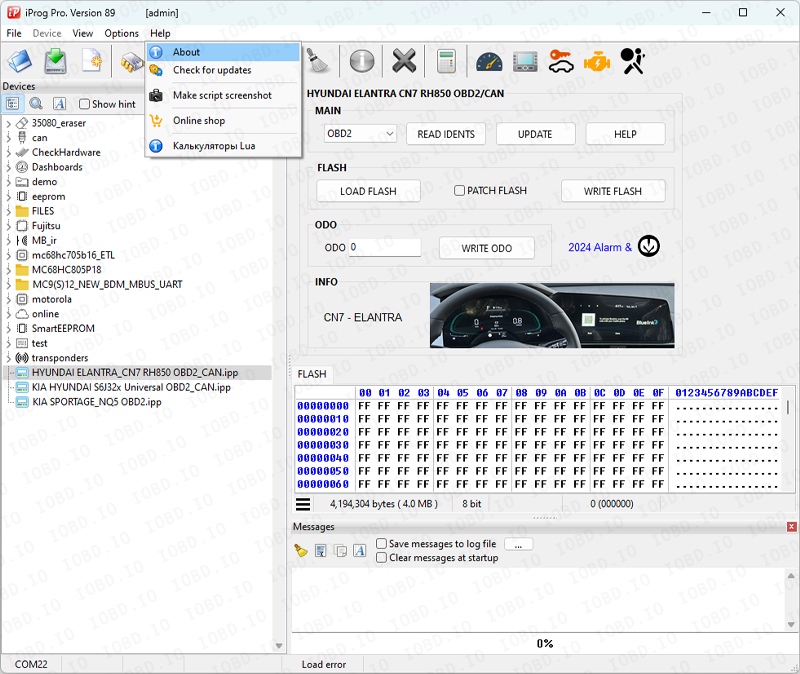
Open the program and click “Help” -> “About”.
Copy data from the program when placing an order
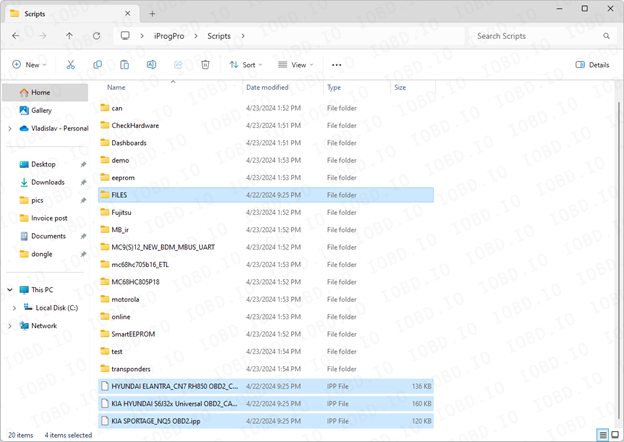
After completing the order, you will receive files, they must be added to the Scripts folder..
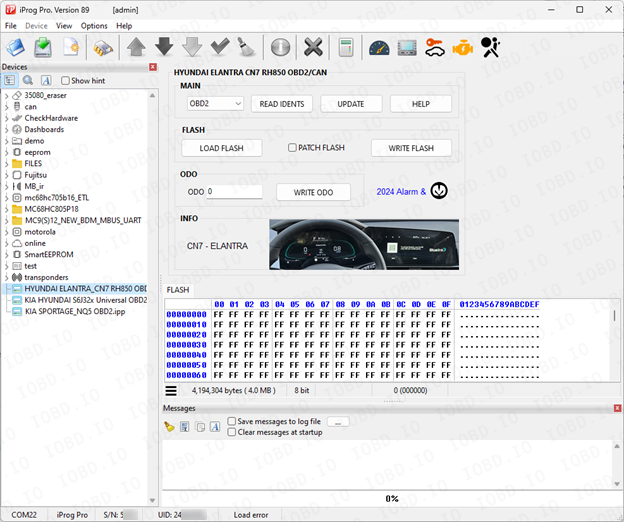
Launch the program and on the left side of the screen you will see the added scripts.
1. No Refunds or Modifications for Digital Licenses
Activated modules or licenses cannot be returned or refunded.
If an incorrect key or device number is entered by the customer, the purchase is not eligible for return.
Licenses cannot be modified, transferred, or reissued for another device under any circumstances.
2. Irreversible Order Processing
After the order status changes to “Waiting for activation”, the data has already been sent to the developer.
From this point onward, the order cannot be canceled, edited, corrected, or refunded.
3. Responsibility for Software Functionality
Our store is not responsible for the functionality, performance, or declared features of any software module.
We do not guarantee the listed functions because we are not the developer.
4. Accuracy of Product Information
Module and script descriptions are provided directly by the manufacturer.
IOBD.io is not responsible for any inaccuracies, missing details, or differences between the description and actual operation.
In disputed situations regarding functionality or listed features, the customer must contact the manufacturer.
5. Customer Responsibility for Installation
IOBD.io sells professional automotive diagnostic software and equipment.
Installation, setup, configuration, and compatibility checks must be performed by the customer.
We do not provide remote installation, programming, or setup services unless explicitly stated otherwise.
6. Required Technical Knowledge
These products are intended for users with basic technical knowledge in automotive diagnostics.
The customer is fully responsible for understanding the installation process and using the software and hardware correctly.
7. No Liability for Incorrect Usage
IOBD.IO is not responsible for issues caused by:
incorrect installation
unsupported or incompatible hardware
improper configuration
third-party interference