
SPTuning On-Board Computer for BMW and Mercedes-Benz — Diagnostics, CAN Monitoring, and Advanced Vehicle Control
SP Tuning On-Board Computer is professional equipment for vehicle diagnostics and chip tuning, compatible with BMW E-LCI / F / G / G-LCI series and Mercedes-Benz (test) models. The device connects to the vehicle’s CAN bus and provides high-frequency real-time parameter monitoring, data logging, and advanced system control.
Suitable for tuning workshops, performance specialists, automotive technicians, and demanding vehicle owners who require precise monitoring of engine, transmission, and auxiliary systems.
Device Purpose
The SPTuning unit is designed for:
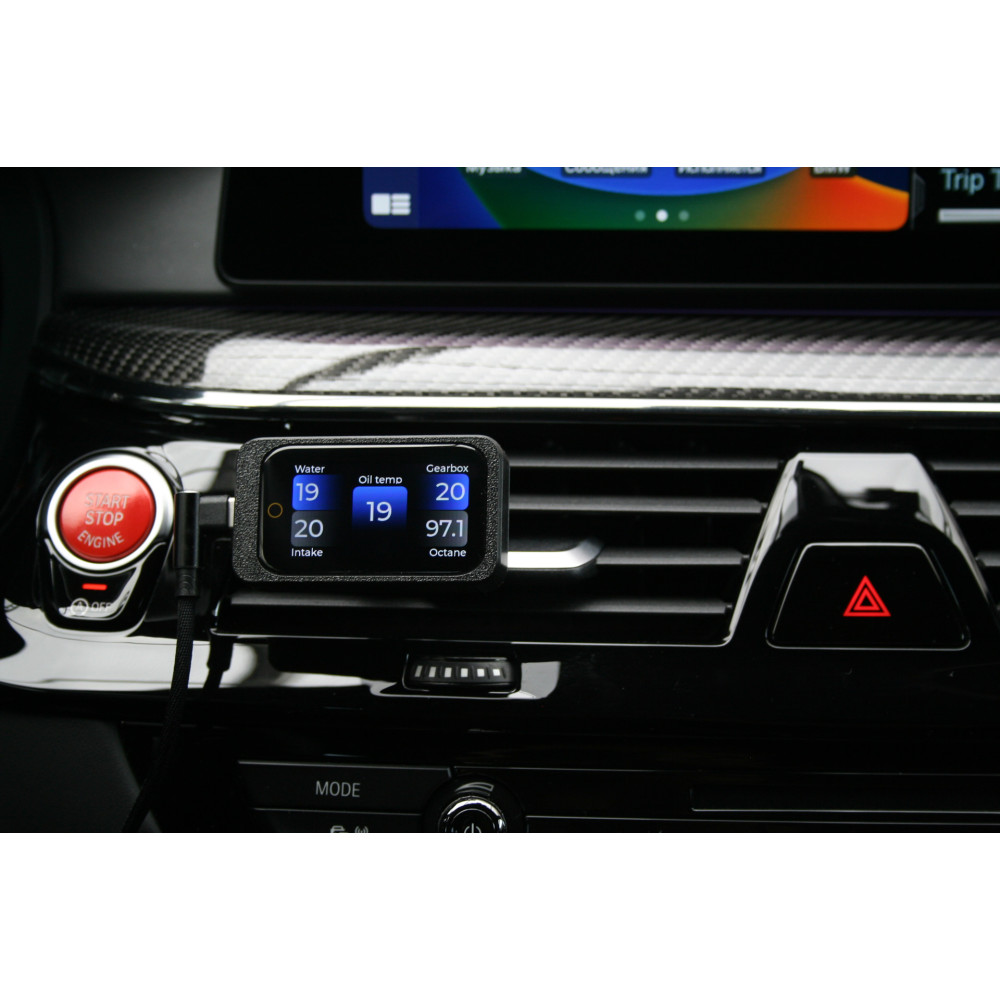
- Real-time monitoring of vehicle parameters (7–10 Hz refresh rate)
- Warning alerts when values exceed safe thresholds
- Logging data in CSV format to SD card
- Reading and clearing diagnostic trouble codes (DTCs)
- Controlling additional vehicle systems and sending custom CAN commands
The system supports autonomous operation, including background monitoring even without a connected display.
Key Features
Real-Time Monitoring
- Display of a single parameter at 7–10 Hz
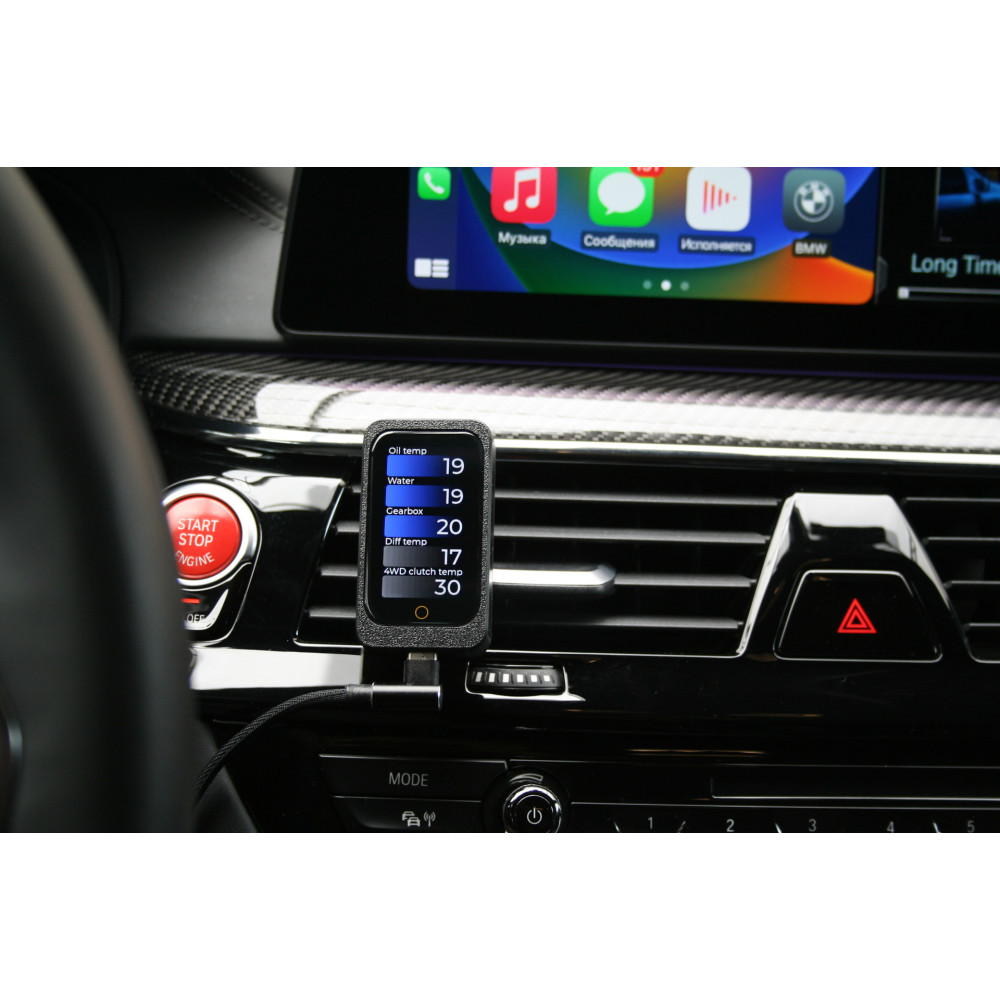
- Simultaneous display of 2 to 24 parameters
- Fully configurable parameter list
- Real-time tracking of minimum and maximum values
- Color-coded warning indicators with adjustable thresholds
Alert and Notification System
- Push notifications on the device display
- Warning transmission directly to the instrument cluster (indicator lights or text messages)
- Autonomous operation without display
- Ability to trigger predefined CAN commands when thresholds are exceeded
Diagnostics and Error Handling
- Reading and clearing DTC error codes
- WEB interface with code description and interpretation
- Display of automatic transmission adaptations
- Clearing octane adaptation history (gasoline engines only)
- ECU reboot function
- Quick vehicle sleep mode activation
- Ignition ON/OFF control via interface
Performance Measurement and Logging
- Acceleration and braking performance measurement
- Logging in CSV format for professional analysis
- Support for Lawicel / CAN Hacker protocol
- Service interval monitoring based on engine hours (NEW)
Advanced Configuration
- Flexible configuration for various BMW and Mercedes-Benz models
- User-defined parameter addition
- Custom CAN command creation (periodic transmission or button-triggered)
- Configurable quick-access command menu
- Customizable UI color profiles
- Automatic night mode activation when parking lights are turned on
Additional Functions (Vehicle-Dependent)
- Start/Stop deactivation (1*)
- Engine start in Sport/Sport+ mode (1*)
- Exhaust flap control (1*)
- Radiator grille shutter control (1*)
- Permanent M seat illumination activation (pre-facelift models) (1*)
- Comfort entry/exit function (driver’s seat moves back after ignition off) (1*)
- Automatic window and sunroof closing (1*)
- Service interval monitoring based on engine hours with on-screen warnings
- Display of fuel quality for the last 5 refuelings (2*)
- Clearing fuel quality history (2*)
- Resetting octane adaptation values (2*)
- xDrive deactivation (see description below)
- Display of automatic transmission adaptation values
- Quick vehicle sleep mode activation
- Control unit reboot
- Ignition on/off
(1*) - Autonomous functions operate even without a display. (2*) - Certain features are available only for gasoline engines.
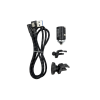
Included in the package:
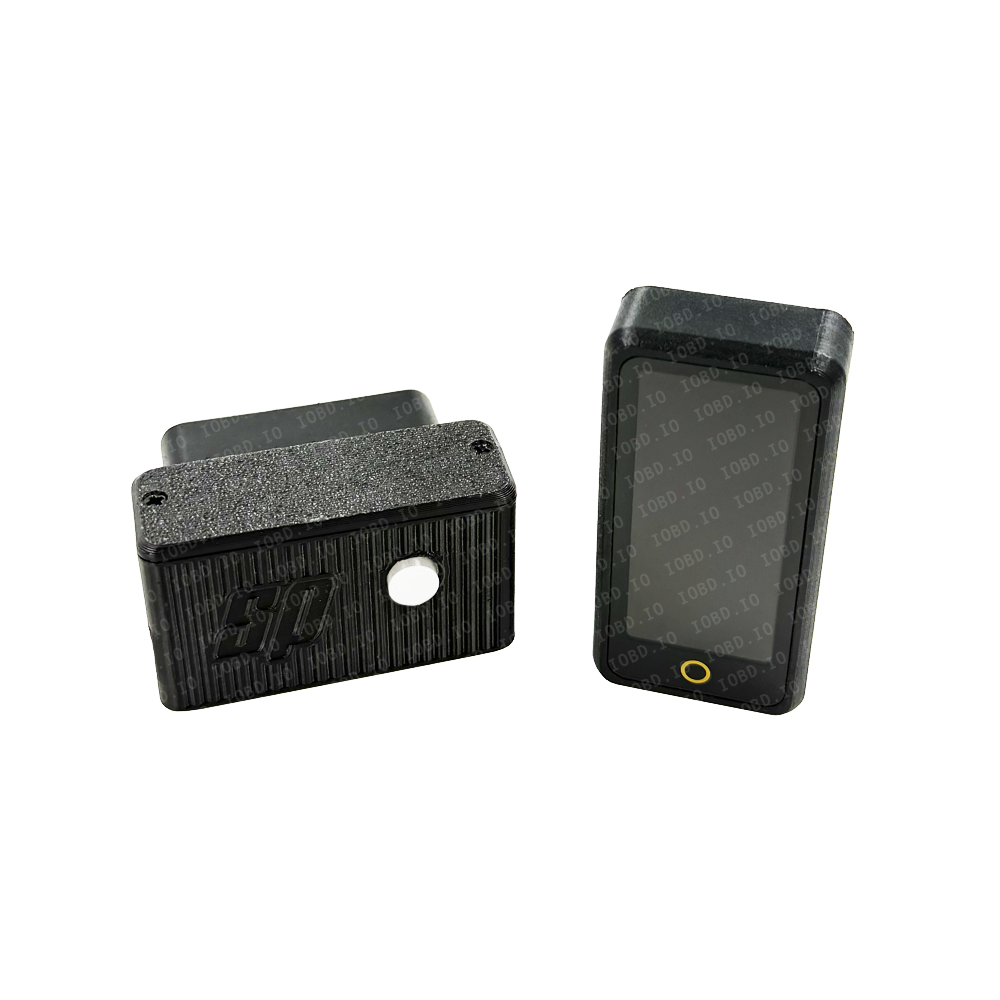
- Host (OBD2 adapter)
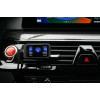
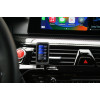
- Display unit
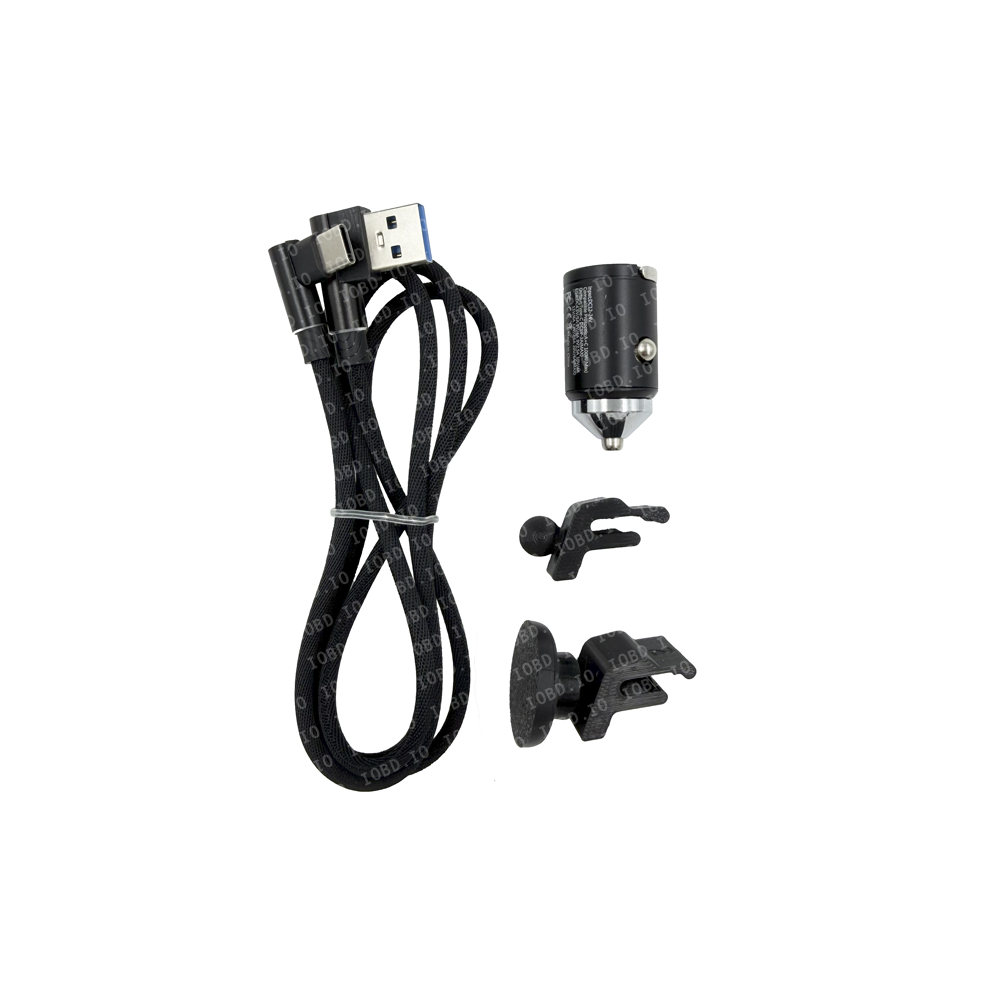
- Magnetic air vent mount
- Display power adapter
- USB cable
The Host is a standalone autonomous device that connects directly to the vehicle’s OBD2 port. It monitors parameters from a user-defined list and alerts the driver by:
- Instrument cluster warning light flashing
- Audible gong/chime
- Text notifications displayed on the instrument cluster
The device supports SD card installation for recording diagnostic data (engine and other control system logs), functioning similarly to a “black box” data recorder.
The Host is capable of operating fully autonomously without a connected display.
It features integrated Bluetooth Low Energy (BLE) and Wi-Fi wireless protocols. Configuration is performed via Wi-Fi through a web interface accessible from any smartphone, tablet, or PC.
Power is supplied directly from the OBD port. No additional wiring, external power sources, or vehicle wiring modifications are required.
When no activity is detected, the device automatically enters power-saving mode, consuming no more than 5 mA. Upon vehicle unlock, it wakes automatically and resumes normal operation.
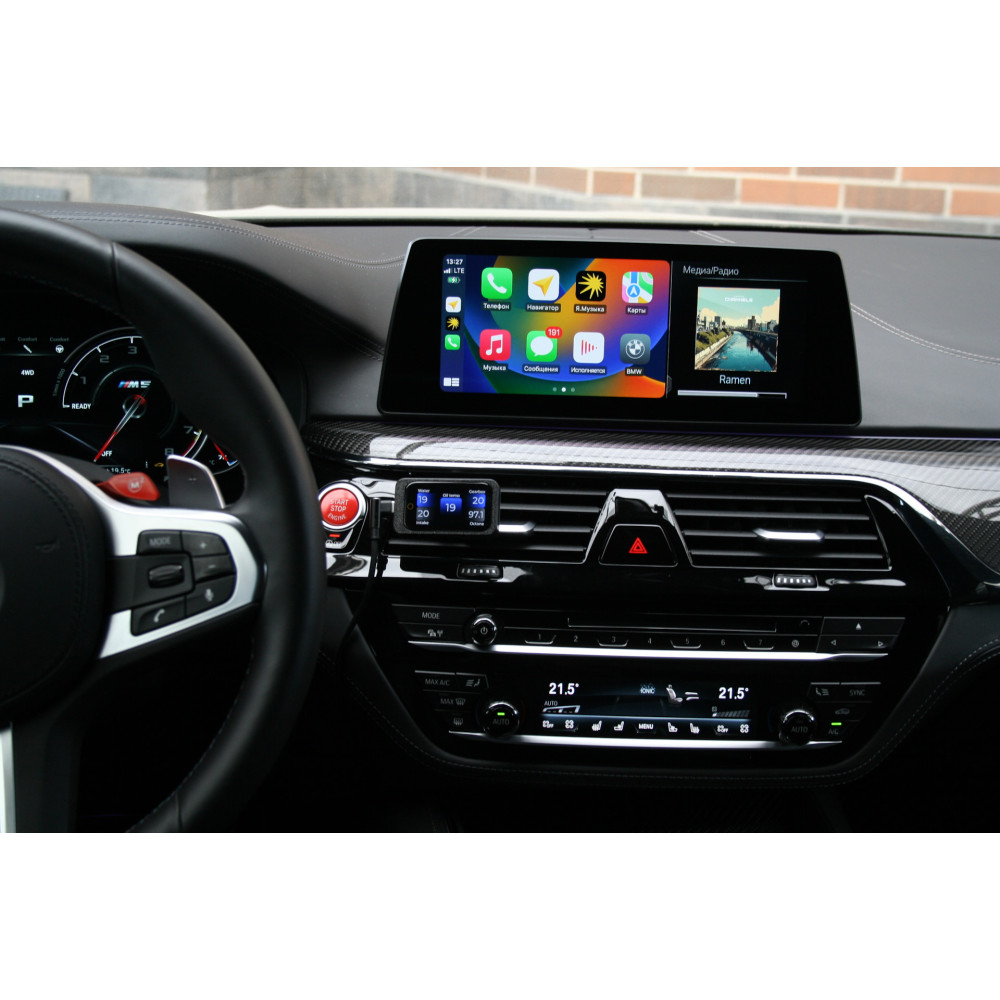
The Display is designed for convenient parameter visualization and quick function configuration. It features an intuitive graphical user interface with touch control and swipe support.
Communication between the Display and the Host is wireless (BLE). A cable is required only to supply power to the Display.
Installation is straightforward and takes no more than 2 minutes. No special knowledge, tools, or modifications to the vehicle’s wiring are required.
Host – plugs directly into the vehicle’s OBD2 port.
Display – mounts to the air vent using the quick-release rotating magnetic holder.
Below you can find detailed video instructions:
Important:
This function is available only on certain BMW engines and is NOT applicable to other vehicle brands.
The information below applies only to stock engines with factory ECU software and a standard exhaust system.
What This Parameter Actually Represents
This is NOT a direct measurement of fuel octane and is NOT a direct octane reading calculated by the ECU.
The value is an adaptation factor ranging from 0 to 1, where:
- 0 = no correction
- 1 = maximum correction
According to BMW’s internal definition:
Faktor adaptierte Kraftstoffqualität (0 = ROZ98 / 1.0 = ROZ91)
- 0 corresponds to 98 ROZ
- 1.0 corresponds to 91 ROZ
ROZ is the German equivalent of RON (Research Octane Number).
The device converts this multiplier into a more intuitive octane value for user convenience.
⚠️ The device does not measure anything itself.
It only displays the data provided by the engine control unit (ECU).
How the ECU Evaluates Fuel Quality
Each ECU has different calibration sensitivity:
- Sensitivity to the adaptation factor
- Sensitivity of the knock control system
Fuel quality is evaluated subjectively by the ECU, primarily based on:
- Knock ignition timing corrections
- Overall engine noise levels
BMW G-Series & LCI F-Series (B-Engines)
B38 / N63 / S63 / N74
These engines are highly sensitive to octane adaptation.
- During warm-up and cruising, the displayed octane may frequently drop to 95 or lower.
- This does NOT automatically indicate poor fuel quality.
- Under load, the value should increase.
⚠️ If the value continues to decrease under load, this may indicate a problem.
B46 / B48 / B58
These engines have low sensitivity.
- During cruising, octane will typically display maximum values even with mediocre fuel.
- Under load, the value will decrease if fuel quality is truly poor.
S58
Octane correction is virtually inactive.
- It will typically always show 98.
- If it drops below 98, fuel quality is genuinely very poor.
BMW F-Series (Pre-LCI) with N/S Engines
Most pre-LCI F-series ECUs do not calculate octane adaptation.
Do not expect this parameter to function.
S55
- Octane parameter not used by the system
- Display not supported
- However, display of the last 5 refueling quality events is supported
S63
- Octane parameter not used
- Display not supported
- Refueling quality display not supported
BMW E-Series
Octane parameter not available. Display not supported.
Important Notes About Tuned Vehicles
With modified hardware or custom tuning, behavior may vary significantly. Always consult your tuner regarding expected operation.
Key principles:
- If octane drops under load, it means fuel quality is worse than expected under those conditions.
- This does NOT automatically mean the fuel itself is bad.
Examples:
- If a tuner increases ignition timing and boost pressure, even good fuel may cause knock corrections, and the ECU may interpret it as poor fuel.
- Thin-walled or poorly mounted exhaust systems may create parasitic noise, which the ECU may interpret as engine knock, causing negative correction.
- Conversely, if knock sensitivity is reduced or octane correction is disabled in tuning, readings may appear ideal while actual engine safety is compromised.
⚠️ Warning
Although transfer case deactivation is a factory-supported command implemented by BMW engineers, the long-term effects of operating an originally all-wheel-drive vehicle in this mode are unknown.
In BMW vehicles, the transfer case functions as a center differential. Differences in front/rear axle rotational speed are compensated by controlled clutch slip inside the transfer case.
Technical Considerations
The transfer case is mechanically optimized for one operating condition:
- 50/50 torque distribution
- No more than 3% rotational speed difference between axles
Any torque redistribution toward the rear axle is achieved via clutch slip, which generates heat.
All transfer cases except F90 and G80 have factory clutch preload.
This means that even in deactivated mode, internal clutch friction remains present, generating heat.
⚠️ Excessive drifting may result in overheating and accelerated clutch wear.
The following is strictly prohibited:
- Dyno testing in 2WD mode
- Extended burnouts using this mode
Operate responsibly.
All actions are performed strictly at your own risk.
Verified Compatible Models
- F30, F15/16, F12/13, F85/86,
- G01/02 дорест, G30, G30lci, G05/06/07
- G2x, G14/15/16 *
* - activation only with engine OFF. AWD is restored after engine restart.
Pending Validation
- Hybrid F-Series and G-Series models
Mercedes-Benz (NEW! Beta Test)
Supported Models
- C-Class
- E-Class
- G-Class
Supported Engines
- M270
- M274
- M276
- M157
- M177
- M178
BMW
E-Series
- Petrol
- N43 (16i)
- N54 (35i)
- N55 (35i)
- S63 (X5M / X6M)
- S65 (M3 / M5)
- Diesel
- N47 (20d, 25d)
- N57 (30d, 35d, 50d)
F-Series
- Petrol
- B38 (16i)
- B46 / B48 (20i, 30i, 35i, 20e, 30e)
- B58 (40i, 45e)
- N13 (16i, 18i)
- N20 / N26 (20i, 25i, 28i)
- N55 (35i)
- S55
- N63 (50i)
- S63
- N74 (60i)
- Diesel
- B37 (16d)
- N47 / B47 (16d, 18d, 20d, 25d)
- N57 (25d, 30d, 35d, 40d, 50d)
G-Series
- Petrol
- B46 / B48 (20i, 30i, 35i, 20e, 30e)
- B58 (40i, 45e)
- S58
- N63 (50i)
- S63
- N74 (60i)
- Diesel
- B37 / B38 (16d)
- B47 (16d, 18d, 20d, 25d)
- B57 (30d, 40d, 50d)
G-Series New (2023+)
- Petrol
- B46 / B48 (20i, 23i, 30i, 35i, 20e, 30e)
- B58 (40i, 50e)
- S68 (M60i, XM, M-Series)
- Diesel
- B47 (20d, 23d, 25d)
- B57 (30d, 35d, 40d)
Supported Control Units
BMW
- MSD81
- MSD85
- MSS60
- MSS65
- MEVD17x
- EDC17x
- MD1x (DDE8 / DDE9)
- MG1x (DME8 / DME9)
- EGS (G2 / G3 / G4)
- GHAS
- LMV
Mercedes-Benz
- MED1772
- MED17731
- MED1775
Mercedes-Benz (Beta Test)
Supported Models
- C-Class
- E-Class
- G-Class
Supported Engines
- M270
- M274
- M276
- M157
- M177
- M178
BMW
E-Series
- Petrol
- N43 (16i)
- N54 (35i)
- N55 (35i)
- S63 (X5M / X6M)
- S65 (M3 / M5)
- Diesel
- N47 (20d, 25d)
- N57 (30d, 35d, 50d)
F-Series
- Petrol
- B38 (16i)
- B46 / B48 (20i, 30i, 35i, 20e, 30e)
- B58 (40i, 45e)
- N13 (16i, 18i)
- N20 / N26 (20i, 25i, 28i)
- N55 (35i)
- S55
- N63 (50i)
- S63
- N74 (60i)
- Diesel
- B37 (16d)
- N47 / B47 (16d, 18d, 20d, 25d)
- N57 (25d, 30d, 35d, 40d, 50d)
G-Series
- Petrol
- B46 / B48 (20i, 30i, 35i, 20e, 30e)
- B58 (40i, 45e)
- S58
- N63 (50i)
- S63
- N74 (60i)
- Diesel
- B37 / B38 (16d)
- B47 (16d, 18d, 20d, 25d)
- B57 (30d, 40d, 50d)
G-Series New (2023+)
- Petrol
- B46 / B48 (20i, 23i, 30i, 35i, 20e, 30e)
- B58 (40i, 50e)
- S68 (M60i, XM, M-Series)
- Diesel
- B47 (20d, 23d, 25d)
- B57 (30d, 35d, 40d)
Supported Control Units
BMW
- MSD81
- MSD85
- MSS60
- MSS65
- MEVD17x
- EDC17x
- MD1x (DDE8 / DDE9)
- MG1x (DME8 / DME9)
- EGS (G2 / G3 / G4)
- GHAS
- LMV
Mercedes-Benz
- MED1772
- MED17731
- MED1775