
- Scripts work only with original devices iProg Pro
-
Processing Time: From a few hours up to several days.
Scripts are created individually by different third-party developers, so fulfillment speed depends directly on their current workload.
Group buy for a paid update of the instrument panel configurator for Kia and Hyundai.
Script only for the IprogPro programmer
The script kit provides advanced settings for Kia and Hyundai instrument panels that are not covered by
variant coding. Panel operation is performed via OBD2 (CAN-BUS). The extended capabilities include such settings:
AEB - (Automatic Emergency Braking) emergency braking assistance system
FCW -(Forward Collision Warning) collision warning system
DBC -(Downhill Brake Control) downhill assist system
AHLS -(Active Hood Lift System) active hood lift system
Language setting - Language settings
Units settings - Measurement unit settings (European kilometers and American miles)
Transmission type setting - Transmission type settings
Speed limit setting - Speed limit settings
There is also the possibility of reading and writing instrument panel memory for backup.
Advanced settings are individual for each series of instrument panels. Currently available are:
Kia Optima (Monochrome):
Language setting - Language settings
Units settings - Measurement unit settings (European kilometers and American miles)
Speed limit setting - Speed limit settings
Transmission type setting - Transmission type settings.
Hyundai Tucson3 2015-2018 series 94001-94003 (Monochrome):
AEB - (Automatic Emergency Braking) emergency braking assistance system
FCW -(Forward Collision Warning) collision warning system
DBC -(Downhill Brake Control) downhill assist system
AHLS -(Active Hood Lift System) active hood lift system
Language setting - Language settings
Units settings - Measurement unit settings (European kilometers and American miles)
Transmission type setting - Transmission type settings
Speed limit setting - Speed limit settings
Hyundai Tucson3 2015-2018 series 94011-94013 (color supervision):
Hyundai Tucson3 2015-2018 series 94001-94003 (Monochrome)
AEB - (Automatic Emergency Braking) emergency braking assistance system
DBC -(Downhill Brake Control) downhill assist system
AHLS -(Active Hood Lift System) active hood lift system
Language setting - Language settings
Units settings - Measurement unit settings (European kilometers and American miles)
Transmission type setting - Transmission type settings
Speed limit setting - Speed limit settings
Kia SoulEV (electric vehicle):
Language setting - Language settings
Units settings - Measurement unit settings (European kilometers and American miles)
TPMS (Tire Pressure Monitoring System) this panel does not have variant coding
Kia Sportage4 series 94001, 94023 (Monochrome):
Language setting - Language settings
Units settings - Measurement unit settings (European kilometers and American miles)
Speed limit setting - Speed limit settings
Transmission type setting - Transmission type settings
Hyundai Tucson3 2018-2020 series 94021-94022-94023 (Monochrome and Color):
Language setting - Language settings
Units settings - Measurement unit settings (European kilometers and American miles)
Speed limit setting - Speed limit settings
Script operation video https://youtu.be/hMFS1o0VRSg
The list will be added to and expanded as other instrument panels become available.
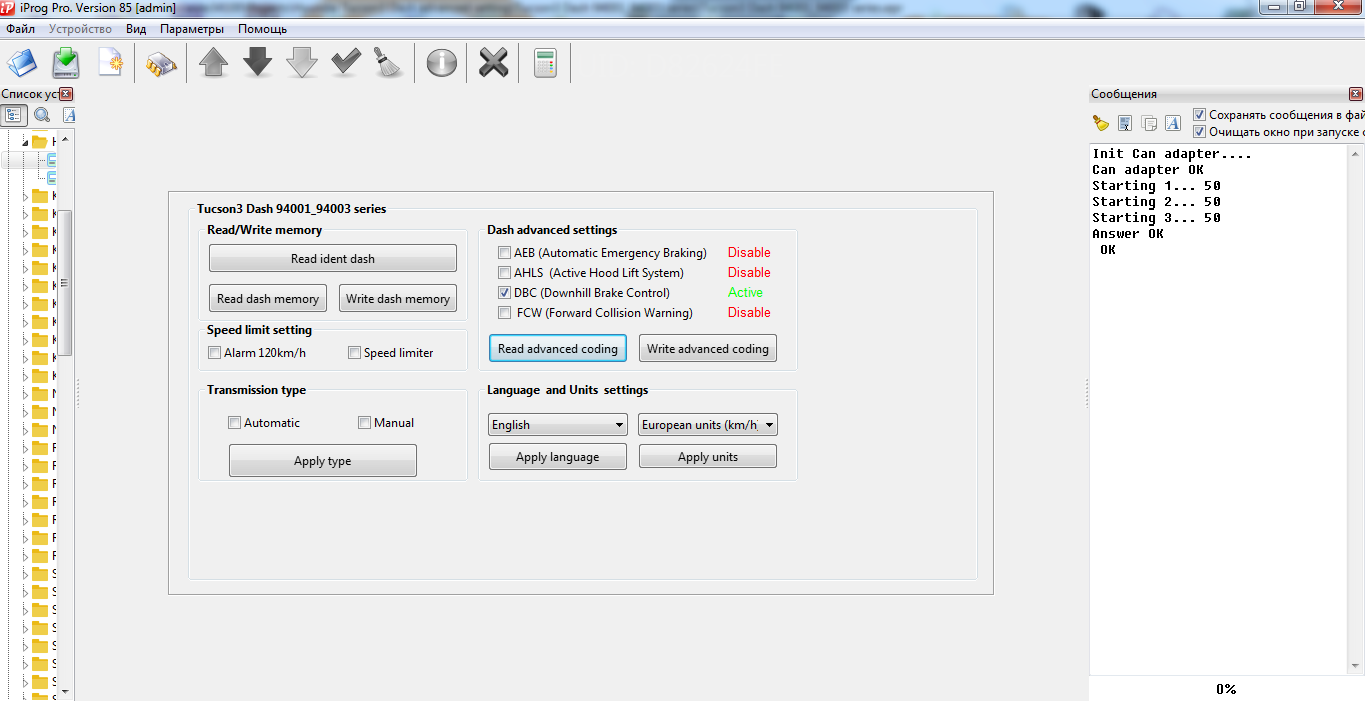

Open the program and click “Help” -> “About”.
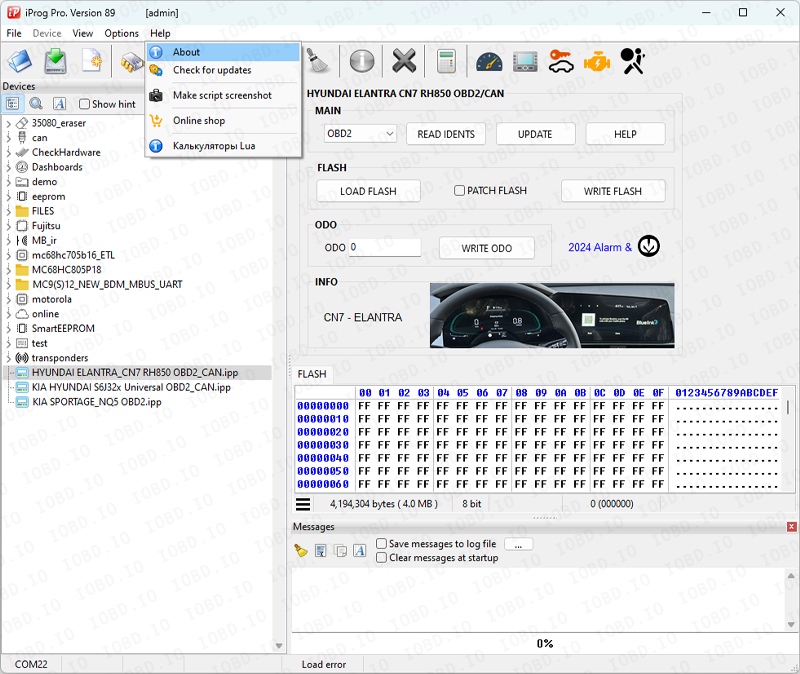
Copy data from the program when placing an order
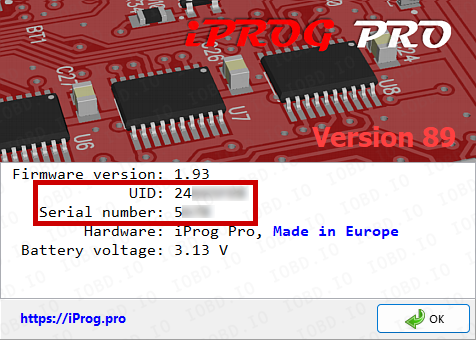
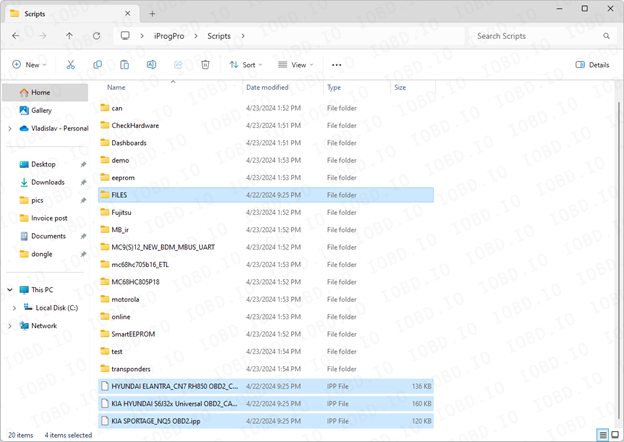
After completing the order, you will receive files, they must be added to the Scripts folder..
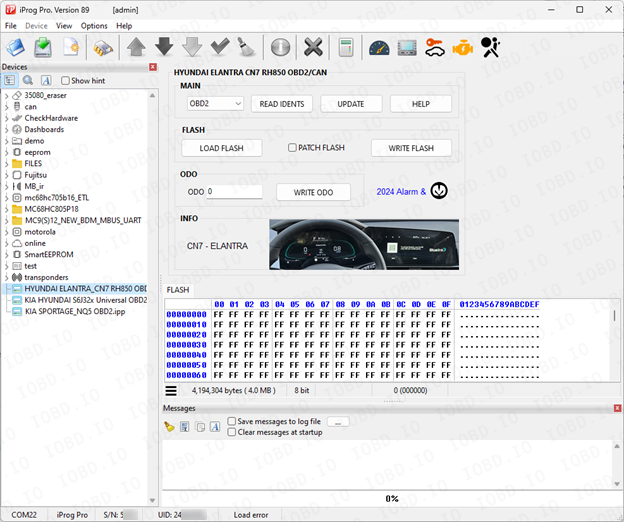
Launch the program and on the left side of the screen you will see the added scripts.
1. No Refunds or Modifications for Digital Licenses
Activated modules or licenses cannot be returned or refunded.
If an incorrect key or device number is entered by the customer, the purchase is not eligible for return.
Licenses cannot be modified, transferred, or reissued for another device under any circumstances.
2. Irreversible Order Processing
After the order status changes to “Waiting for activation”, the data has already been sent to the developer.
From this point onward, the order cannot be canceled, edited, corrected, or refunded.
3. Responsibility for Software Functionality
Our store is not responsible for the functionality, performance, or declared features of any software module.
We do not guarantee the listed functions because we are not the developer.
4. Accuracy of Product Information
Module and script descriptions are provided directly by the manufacturer.
IOBD.io is not responsible for any inaccuracies, missing details, or differences between the description and actual operation.
In disputed situations regarding functionality or listed features, the customer must contact the manufacturer.
5. Customer Responsibility for Installation
IOBD.io sells professional automotive diagnostic software and equipment.
Installation, setup, configuration, and compatibility checks must be performed by the customer.
We do not provide remote installation, programming, or setup services unless explicitly stated otherwise.
6. Required Technical Knowledge
These products are intended for users with basic technical knowledge in automotive diagnostics.
The customer is fully responsible for understanding the installation process and using the software and hardware correctly.
7. No Liability for Incorrect Usage
IOBD.IO is not responsible for issues caused by:
incorrect installation
unsupported or incompatible hardware
improper configuration
third-party interference
 In stock
Script Ford Ranger / Raptor (R7F701405) Continental OBD2
In stock
Script Ford Ranger / Raptor (R7F701405) Continental OBD2
$119.47
![VM35B292_DBL / VM35B292_3MODE [174] firmware](https://iobd.io/image/cache/catalog/products/Chip/174-260x260.png)
-260x260.png)